Ping Checks
Ping checks use ICMP pings to test if a host at a given network address is online and responding. Such check scan be useful for monitoring of network devices where using a URL Check is not an option, or for providing alternative checks for a host to determine if the host is no longer working or just the website on it.
Ping checks also monitor latency and provide adjustable alerting thresholds for latency as required.
Adding a Ping Check
As with all checks, Ping checks can be managed through the API or using Terraform. See the relevant documentation for each for adding Ping checks through these. This guide will show how to add a Ping check through the web console.
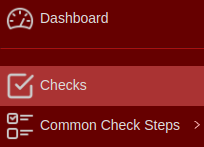
- Login to Web Console and select Checks from the main menu.
- Click
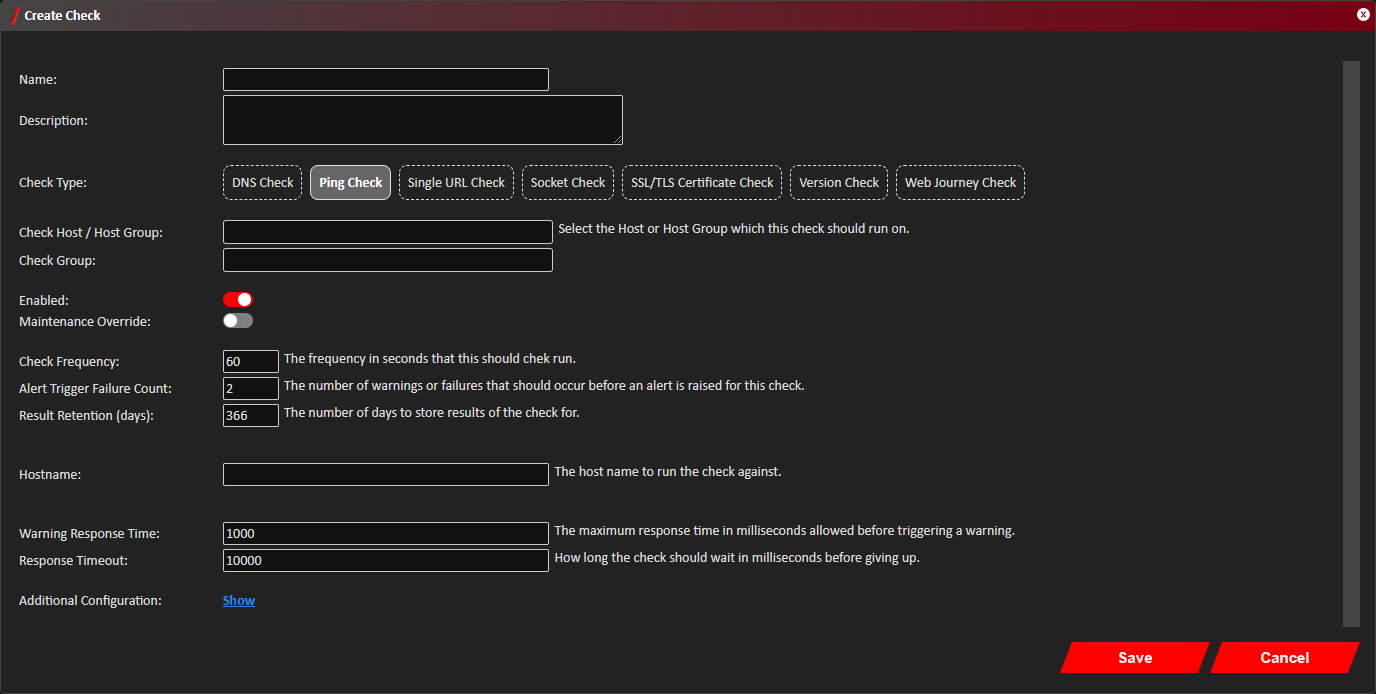
Add located towards the top left of the web console. - The Create Check window should now show. Definitions for each field can be found below under
Configuration Definitions.
Ensure the Check Type is set to Ping Check.
- Click
Save . - You should now see confirmation that the Check was successfully created in the bottom right notification area in the
web console. If the check was created in the Dashboard then it will shortly appear under the Check Group it was
assigned too.
Newly created checks will initially show with as a successful check in colour on the dashboard until it's first run, but will have its status show as either empty or a '-'.
Amending a Ping Check
As with all checks, Ping checks can be managed through the API or using Terraform. See the relevant documentation for each for adding Ping checks through these. This guide will show how to amend a Ping check through the web console.
- Login to Web Console and select Checks from the main menu.
- Click
Actions next to the Check you want to edit, and then clickEdit .
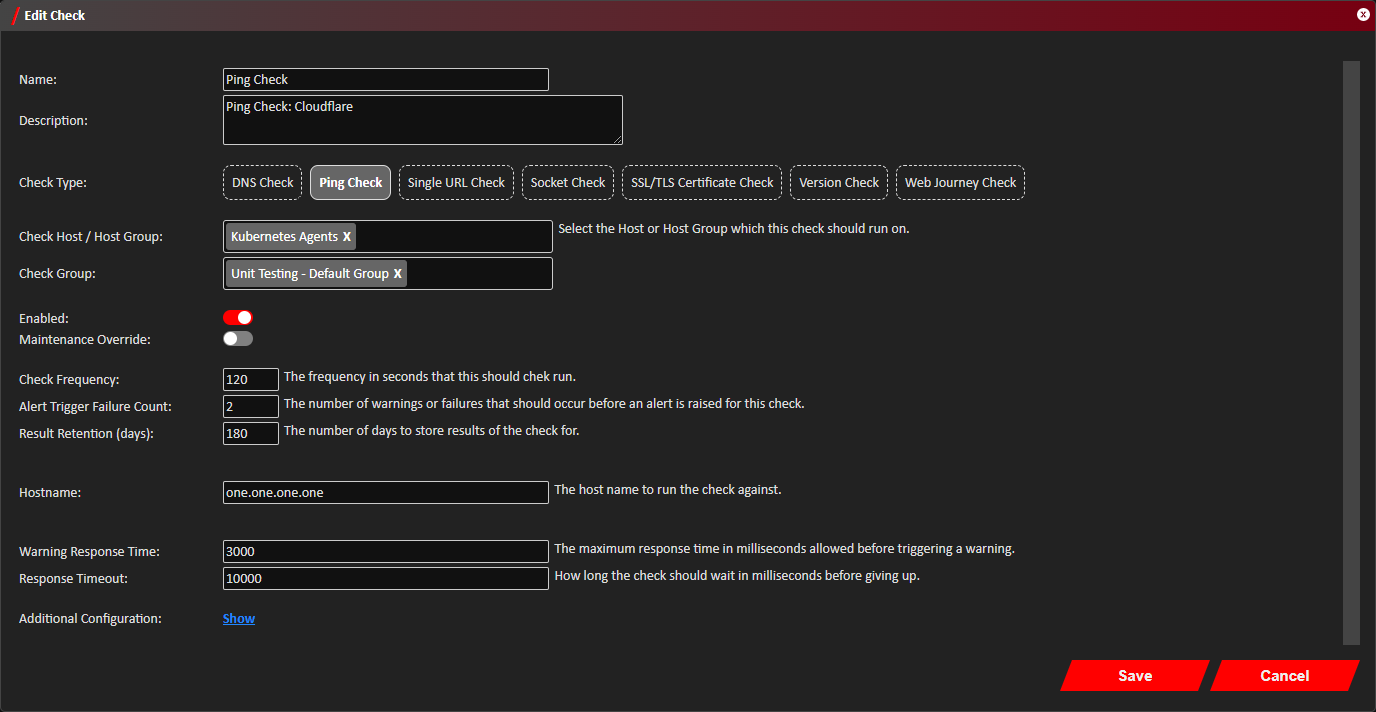
The list of checks shown can be filtered using the search bar to by the checks name, description, hostname or linked Check Group or App Group names. - The Edit Check window should now show. Definitions for each field can be found below under
Configuration Definitions.
Ensure the Check Type is set to Ping Check.
- Click
Save . - Confirmation the check was successfully updated should be shown in the bottom right notification area of the web console. Any checks in flight will continue to use the previous configuration.
Removing Ping Checks
- Login to Web Console and select Checks from the main menu.
- Click
Actions next to the Check you want to edit, and then clickRemove .
The list of checks shown can be filtered using the search bar to by the checks name, description, hostname or linked Check Group or App Group names. - Click
Remove on the Remove Check conformation prompt. - Confirmation the check was successfully deleted should show in the bottom right notification area of the web console. Checks in flight may still try and complete so could still produce an alert shortly after deletion. All result history of the check will also be removed.
Configuration Definitions
| Name | Description |
|---|---|
| Name | Provide a name to define what this check is monitoring. |
| Description | Space to provide a longer description of what the check is monitoring. |
| Check Type | The type of check this is. This should be set to Ping Check. |
| Check Host / Host Group | The Check Host or Host Group to run this check on. |
| Hostname | The hostname to lookup as part of this check. |
| Check Group | The Check Group to assign this check to, which will determine which dashboard it will be shown in. |
| Enabled | A toggle to enable or disable this check from running. |
| Maintenance Override | A toggle to manually put the check into maintenance mode. This allows the check to continue running and storing results, but failures will not produce any alerts or notifications, and do not get counted in some reports. |
| Check Frequency | The minimum frequency in seconds that this check should be run. |
| Alert Trigger Failure Count | The number of successive failed checks that should occur before an alert or notification is fired. |
| Result Retention (days) | The number of days that the history of results for this check should be retained for. |
| Warning Response Time | The maximum response time in milliseconds allowed before triggering a warning. |
| Response Timeout | How long the check should wait in milliseconds before giving up, resulting in the check reporting failed. |
| Additional Configuration | Additional configuration for this check can be found by clicking |
Additional Configuration
| Name | Description |
|---|---|
| Expected Addresses | The list of IP addresses that the given hostname should resolve to. If it resolves to an address outside of this list then the check will fail. |